Cut, Close, or Consult?

A Case-Based Approach to Skin Cancer for Plastic Surgeons

David M. Miller, MD, PhD

2026-05-27

Today’s Goal

Use real-world cases to decide when to:

Cut — biopsy or excise in a way that preserves staging

Close — reconstruct after the oncologic question is answered

Consult — bring in the right team before the wrong procedure

Melanoma and CSCC are increasingly surgical and multidisciplinary diseases.

Case 1: Pigmented Lesion on the Forearm

A 72-year-old woman presents with a pigmented lesion on the right forearm.


She is unsure how long it has been present, but thinks it may have changed over time.
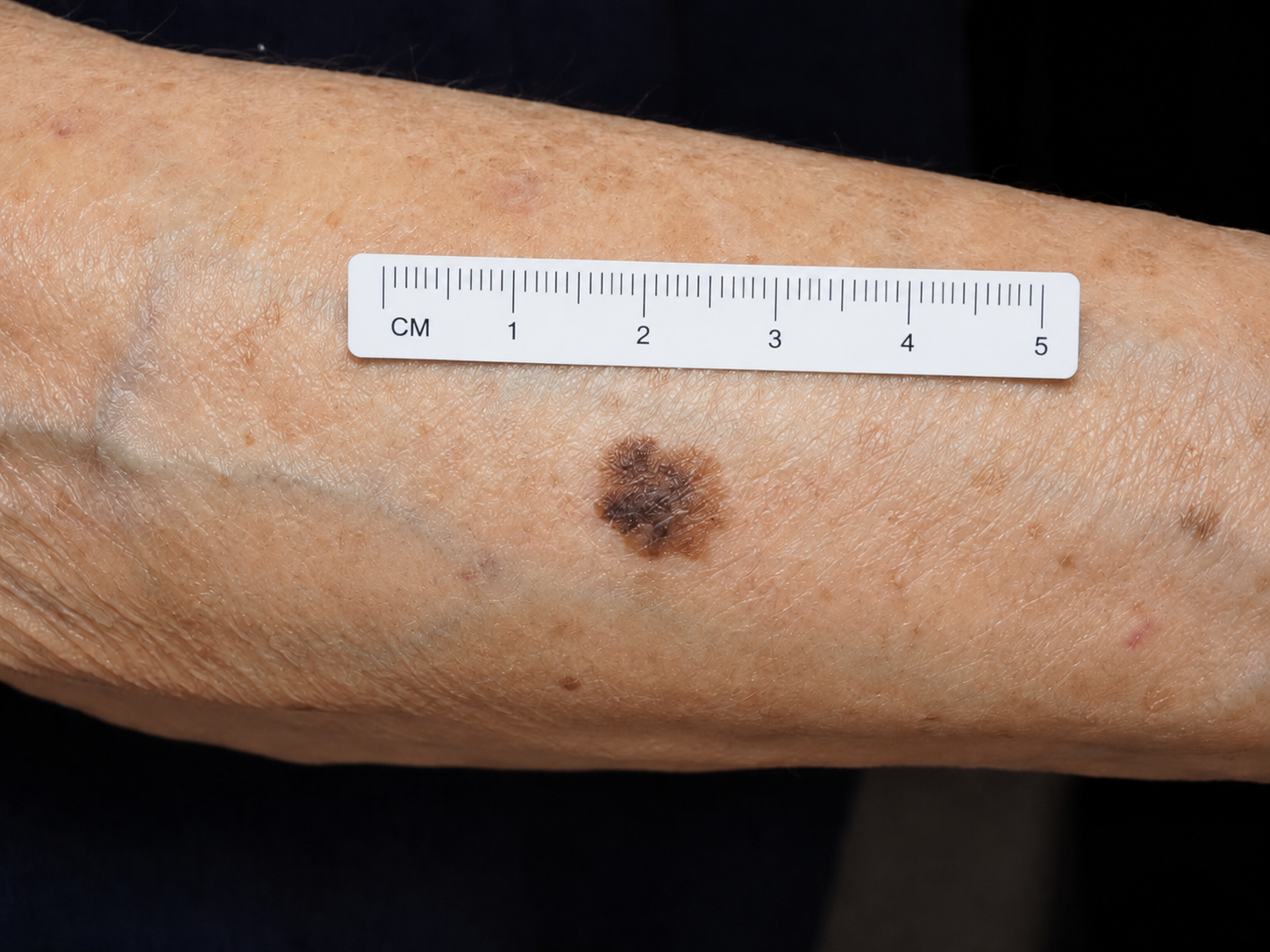
Cut or Consult?

What should happen next?

  1. Shave biopsy
  2. Punch biopsy
  3. Excisional biopsy
  4. Wide local excision
  5. Refer before biopsy

Answer: Excisional Biopsy

Why? Because the biopsy is the first staging procedure.

For a lesion suspicious for melanoma, the goal is to obtain:

  • The entire lesion
  • Full-thickness sampling
  • Accurate Breslow depth
  • Peripheral and deep margin status

Practical answer: narrow excisional biopsy with ~1–3 mm margins.

Rationale Behind Those Recommendations?

Melanoma management depends on microstaging

  • Breslow depth determines wide local excision margins
  • Depth and ulceration guide sentinel lymph node biopsy discussion
  • A partial biopsy can miss the deepest invasive component
  • A wide excision up front can complicate downstream planning


Guideline logic: biopsy should preserve the information needed for diagnosis, staging, and definitive surgical planning.


Teaching point: excisional biopsy minimizes avoidable uncertainty.

AAD melanoma guideline; Ahmadi et al. Ann Surg Oncol. 2021.

Case 2: Slowly Growing Pigmented Patch on the Cheek

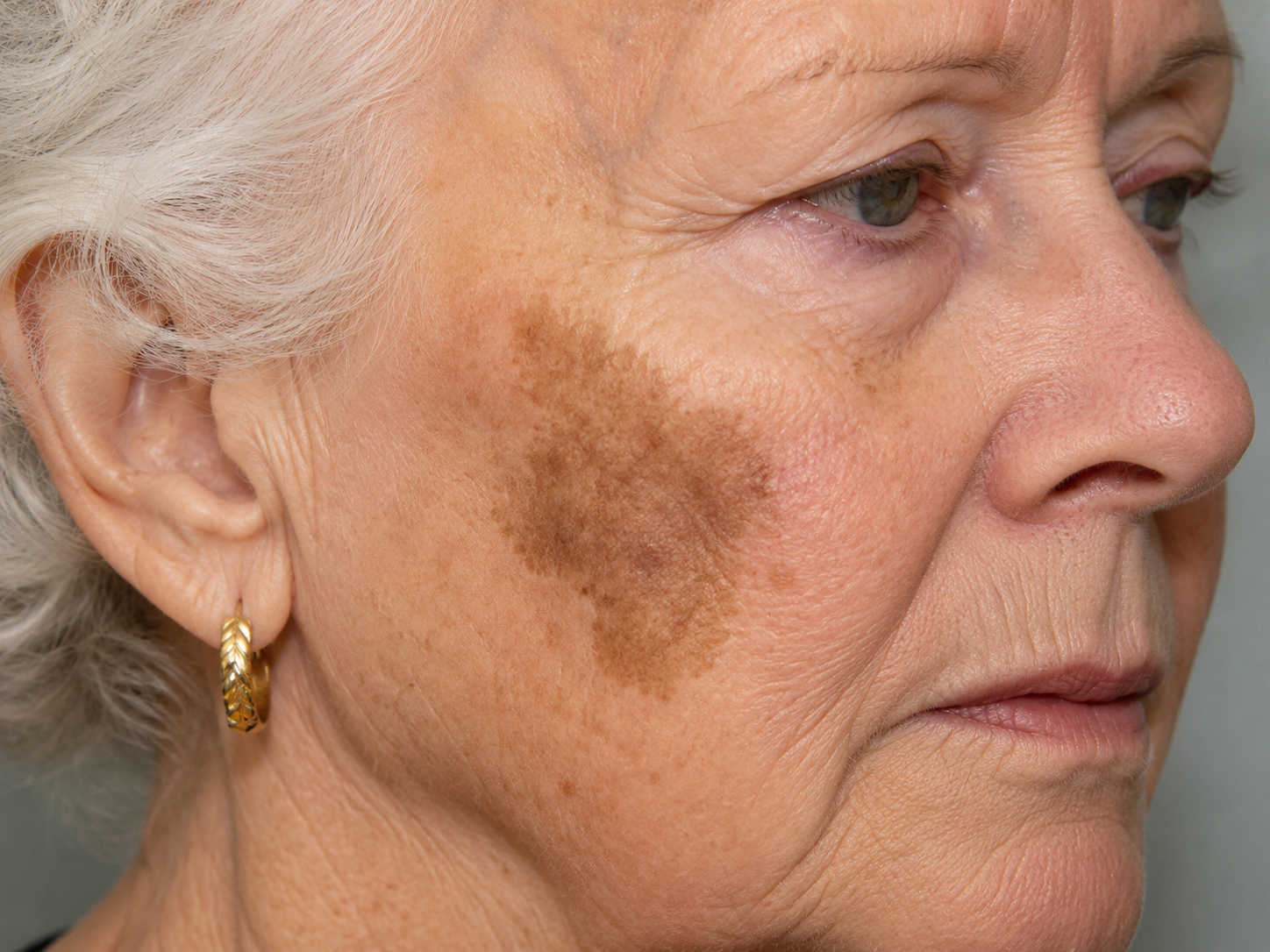
A 75-year-old woman presents with a slowly growing, asymptomatic pigmented patch on the right cheek.


She is unsure when it first appeared, but believes it has gradually enlarged over several years.
Cut or Consult?

What is the best next step?


  1. Broad shave biopsy
  2. Excisional biopsy
  3. Multiple scouting biopsies
  4. Refer to dermatology for dermoscopy / confocal microscopy

The Lentigo Maligna Biopsy Exception


Usual melanoma rule: when feasible, perform a narrow complete / excisional biopsy to preserve microstaging.


But lentigo maligna is different:

  • Usually macular and broad
  • Often on the face or other cosmetically sensitive sites
  • Complete excisional biopsy may be impractical

AAD Guidelines of Care for Primary Cutaneous Melanoma; NCCN Cutaneous Melanoma Guidelines v2.2026.

The Lentigo Maligna Biopsy Exception


For suspected melanoma in situ, lentigo maligna type, a broad shave biopsy can sample more of the lesion than several small punches.


Practical answer: broad shave biopsy extending into the deep papillary / superficial reticular dermis.


Why depth still matters: the goal is to detect focal microinvasion that would upstage MIS to invasive lentigo maligna melanoma.

AAD Guidelines of Care for Primary Cutaneous Melanoma; NCCN Cutaneous Melanoma Guidelines v2.2026.

Practical Answer: Consult, Then Targeted Scouting Biopsies

Large pigmented facial patch
suspicious for lentigo maligna / LMM

This is not the lesion to broadly shave in its entirety.


For a 4–5 cm facial lesion, the practical next step is:


Consult

Dermoscopy ± confocal → targeted scouting biopsies of the most atypical areas

AAD Guidelines of Care for Primary Cutaneous Melanoma; NCCN Cutaneous Melanoma Guidelines; IDS consensus recommendations.

Practical Answer: Consult, Then Targeted Scouting Biopsies

Large pigmented facial patch
suspicious for lentigo maligna / LMM

Why?

  • The lesion is large
  • The site is cosmetically sensitive
  • Complete excisional biopsy is impractical
  • A broad shave of the entire lesion would be unnecessarily destructive

Biopsy goal: confirm LM/LMM and rule out focal invasion before definitive margin-controlled surgery.

AAD Guidelines of Care for Primary Cutaneous Melanoma; NCCN Cutaneous Melanoma Guidelines; IDS consensus recommendations.

Case 1 Continued: The Pathology Returns

The forearm lesion was sampled with a narrow excisional biopsy.

The patient returns to discuss the pathology.


Pathology Report

Diagnosis: Superficial spreading melanoma
Breslow thickness: 1.6 mm
Ulceration: Not identified
Mitotic rate: 1/mm²
Microsatellites: Not present
Tumor-infiltrating lymphocytes: Present, non-brisk
Margins: Inked margins negative

Pathologic stage: pT2a

Case 1 Continued: Next Steps?


  1. Observation only
  1. Wide local excision (WLE) alone
  1. WLE + sentinel lymph node biopsy
  1. PET/CT before surgery
  1. Completion lymph node dissection

Key surgical question: Is this still just a local excision problem?

Answer: Wide Local Excision + Offer SLNB

For a 1.6 mm, non-ulcerated melanoma:

Next step: wide local excision + offer sentinel lymph node biopsy.

Why SLNB?

  • 1.6 mm Breslow → above the offer threshold
  • Clinically node-negative
  • SLN status strongly informs prognosis, stage, adjuvant therapy, and surveillance

Coordinate before reconstruction: SLNB is ideally done before or with definitive WLE, especially before complex flap closure.

What do the trials tell us?

  • MSLT-I: SLNB is a powerful staging/prognostic tool; survival benefit in the overall cohort was not clearly shown.
  • MSLT-II: Positive SLNB does not mandate CLND; ultrasound surveillance is often appropriate.

Surgeon takeaway: SLNB helps decide stage, adjuvant therapy, and surveillance — not whether the scar is already “clear.”

ASCO/SSO SLNB Guideline Update; MSLT-I final report; MSLT-II.

Case 1 Continued: A Missed Exam Finding

You are reviewing the next steps for her 1.6 mm, non-ulcerated melanoma of the forearm.

As you review the chart, you notice something important:

The regional lymph node exam was not documented.

You examine her now.

In the right axilla, you palpate a:

3 cm firm axillary mass


What happens next?

  • Consult legal counsel?
  • Proceed with WLE + SLNB?
  • Biopsy the node?
  • Order staging imaging?
  • Refer before surgery?

Answer: Tissue Confirm, Stage, and Refer

A palpable 3 cm axillary mass changes the pathway.

Next step: ultrasound-guided FNA or core biopsy of the axillary node.

If melanoma is confirmed:

  • This is clinically node-positive disease
  • SLNB is no longer the staging procedure
  • The question shifts to stage III workup and multidisciplinary planning

Complete the staging workup

  • PET/CT to evaluate for metastatic disease
  • Brain MRI to evaluate for CNS metastases
  • Confirm resectability / extent of disease

Refer before definitive surgery

  • Medical oncology
  • Surgical oncology

Surgeon takeaway: palpable nodal disease should trigger tissue confirmation, staging imaging, and referral

How We Treat Resectable Stage III Melanoma Now

SWOG S1801

Design: resectable stage III–IV melanoma; pembrolizumab before + after surgery vs after surgery.

Result

  • 2-year EFS: 72% vs 49%
  • HR 0.58
  • Same total pembrolizumab duration

Message: starting PD-1 before surgery improves outcomes compared with saving it all for after surgery.

NADINA

Design: macroscopic stage III melanoma; neoadjuvant ipi/nivo vs upfront surgery + adjuvant nivo.

Result

  • 12-month EFS: 83.7% vs 57.2%
  • HR 0.32
  • Major pathologic response: 59%

Message: pathologic response can guide escalation or de-escalation after surgery.

SWOG S1801; NADINA. Overall survival remains immature; combination immunotherapy has higher grade ≥3 toxicity.

Case 3: Node-Negative, But High Risk

A 48-year-old woman has melanoma of the right shoulder.

After WLE + SLNB:

  • Breslow: 3.5 mm
  • Ulcerated
  • SLNB negative

Stage IIB melanoma
pT3bN0

What comes next?

  • Observation?
  • Medical oncology referral?
  • Adjuvant anti–PD-1?
  • How do we frame risk?

First step: risk stratify.

Risk Stratification: Stage II Melanoma
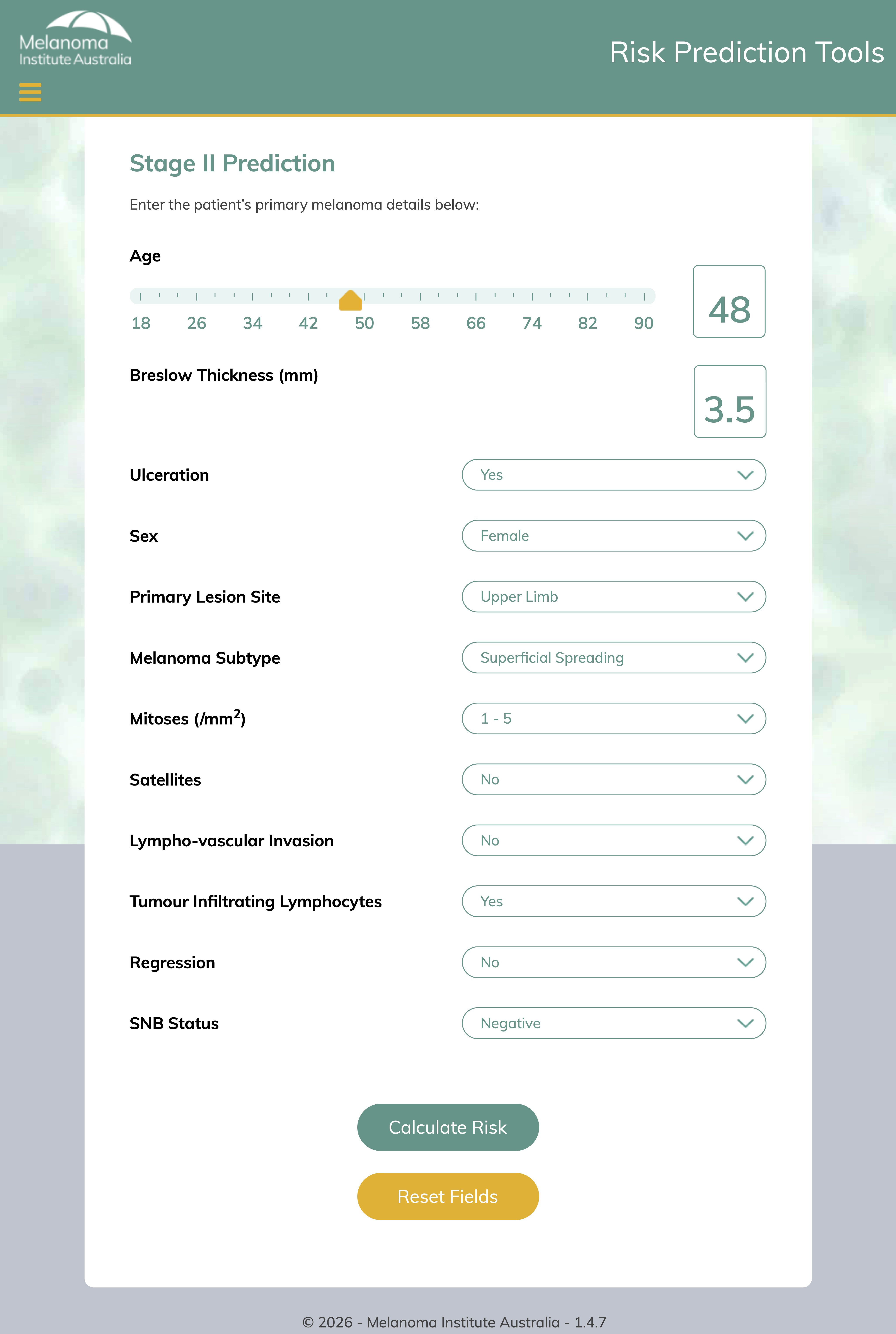
Risk Stratification Changes the Conversation

This is node-negative melanoma.

Estimated risk is still meaningful.
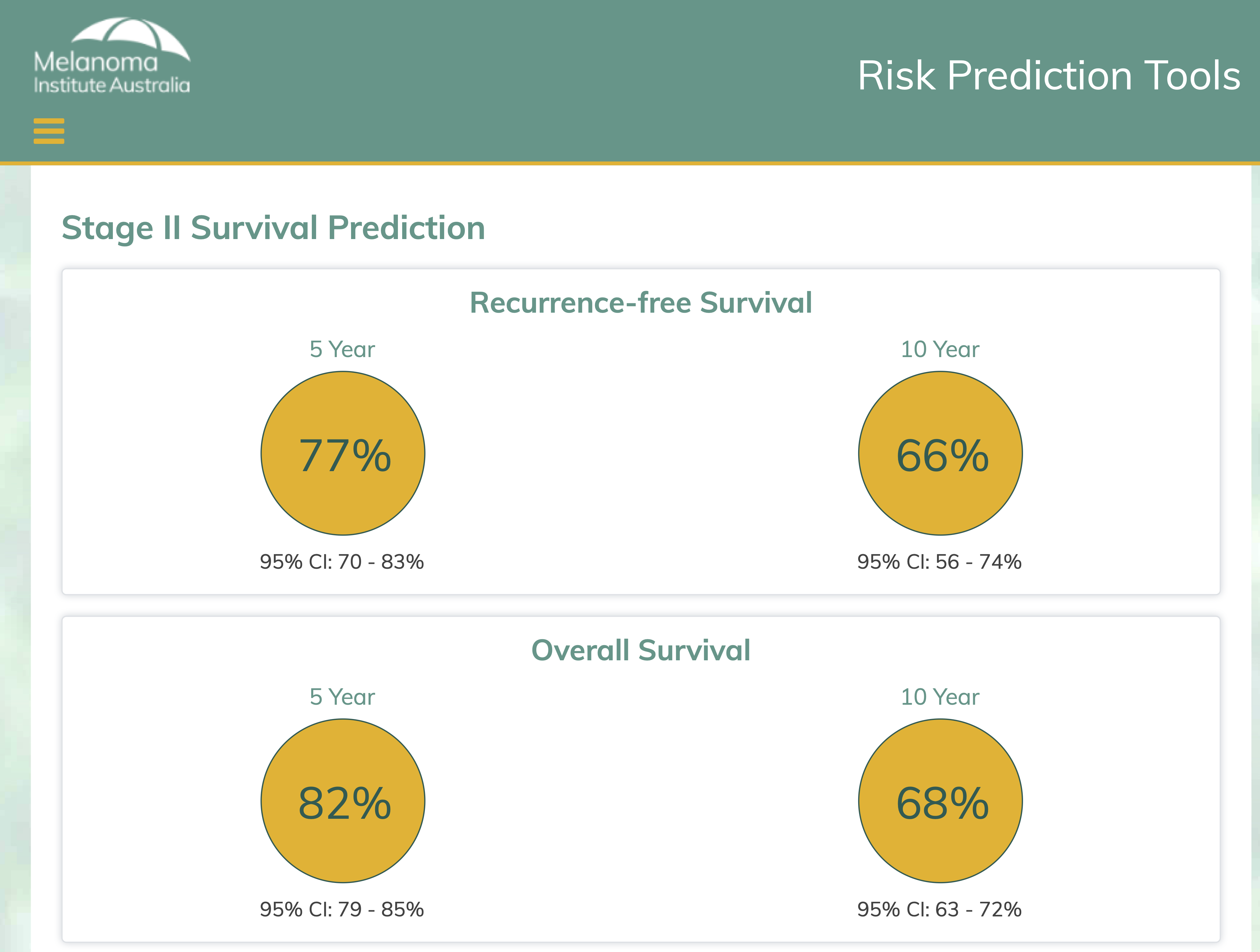
Estimated 10-year RFS: 66%


That means recurrence risk is roughly 1 in 3 over 10 years.

Melanoma Institute Australia Stage II Prediction Tool.

Adjuvant Anti–PD-1: What Improves?

Stage IIB/IIC node-negative melanoma

  • KEYNOTE-716: improved 36-month RFS by ~13%
  • CheckMate 76K: improved 12-month RFS by ~10%

NCCN: pembrolizumab or nivolumab are preferred adjuvant options.

KEYNOTE-716; CheckMate 76K; NCCN Cutaneous Melanoma Guidelines.

Adjuvant Anti–PD-1: What Remains Uncertain?

No proven overall survival benefit yet

  • Observation remains reasonable for selected patients
  • Toxicities can be permanent
  • Risk-benefit discussion depends on baseline recurrence risk

Practical answer: medical oncology referral + shared decision-making.

KEYNOTE-716; CheckMate 76K; NCCN Cutaneous Melanoma Guidelines.

Melanoma: What Should Plastic Surgeons Remember?

Cut
Biopsy technique determines staging.

Close
Reconstruction timing depends on margins, SLNB, and treatment plan.

Consult
Palpable nodes, high-risk stage II disease, and facial LM/LMM need multidisciplinary planning.

Core principle: the first procedure should preserve—not limit—the next decision.

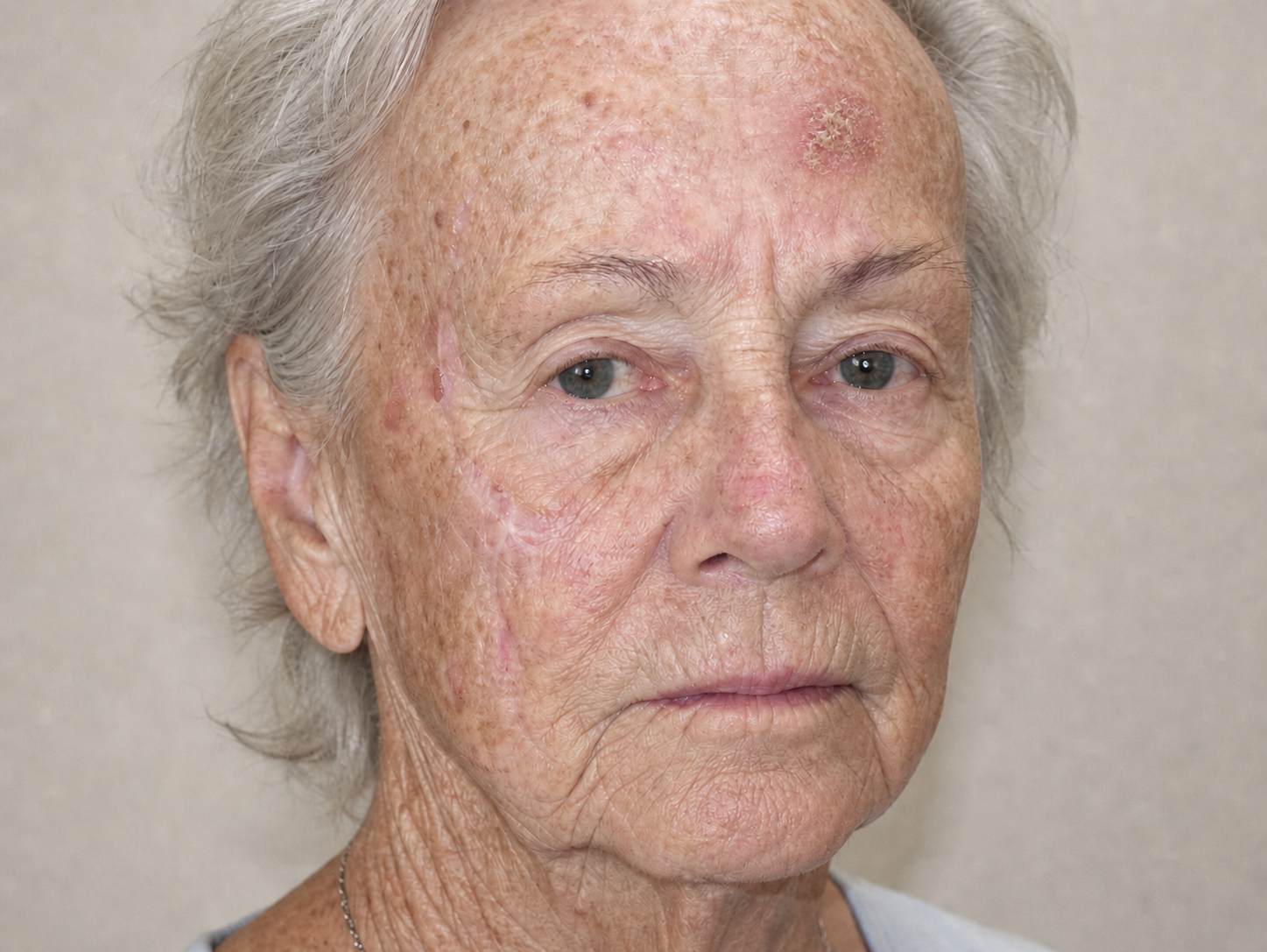
Case 4: Forehead CSCC

An 82-year-old woman with numerous prior NMSCs presents with a new lesion on the left forehead.


Physical exam:

  • 1.3 cm
  • No clinical adenopathy

Biopsy shows:

  • Well-differentiated CSCC

Question: cut & close, or consult?

This Is a Surgical Case

For this patient, surgery is appropriate.

The question is not whether to treat surgically.

The question is: how should we assess the margin?

That decision determines whether you should cut and close or coordinate margin-controlled surgery first.

How Do We Assess the Margin?

Standard excision

Representative vertical sections
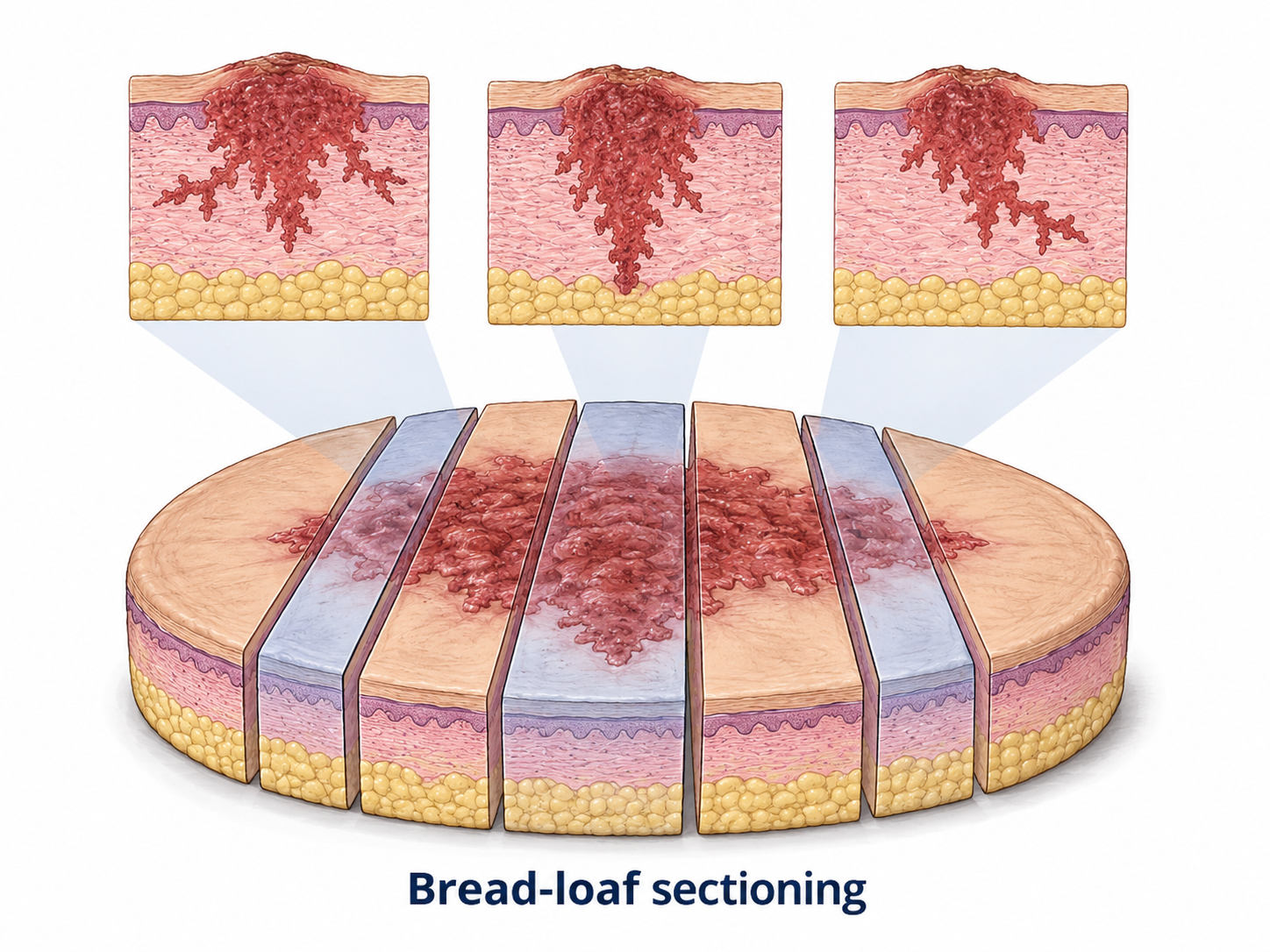
Mohs / PDEMA

Peripheral + deep en face assessment
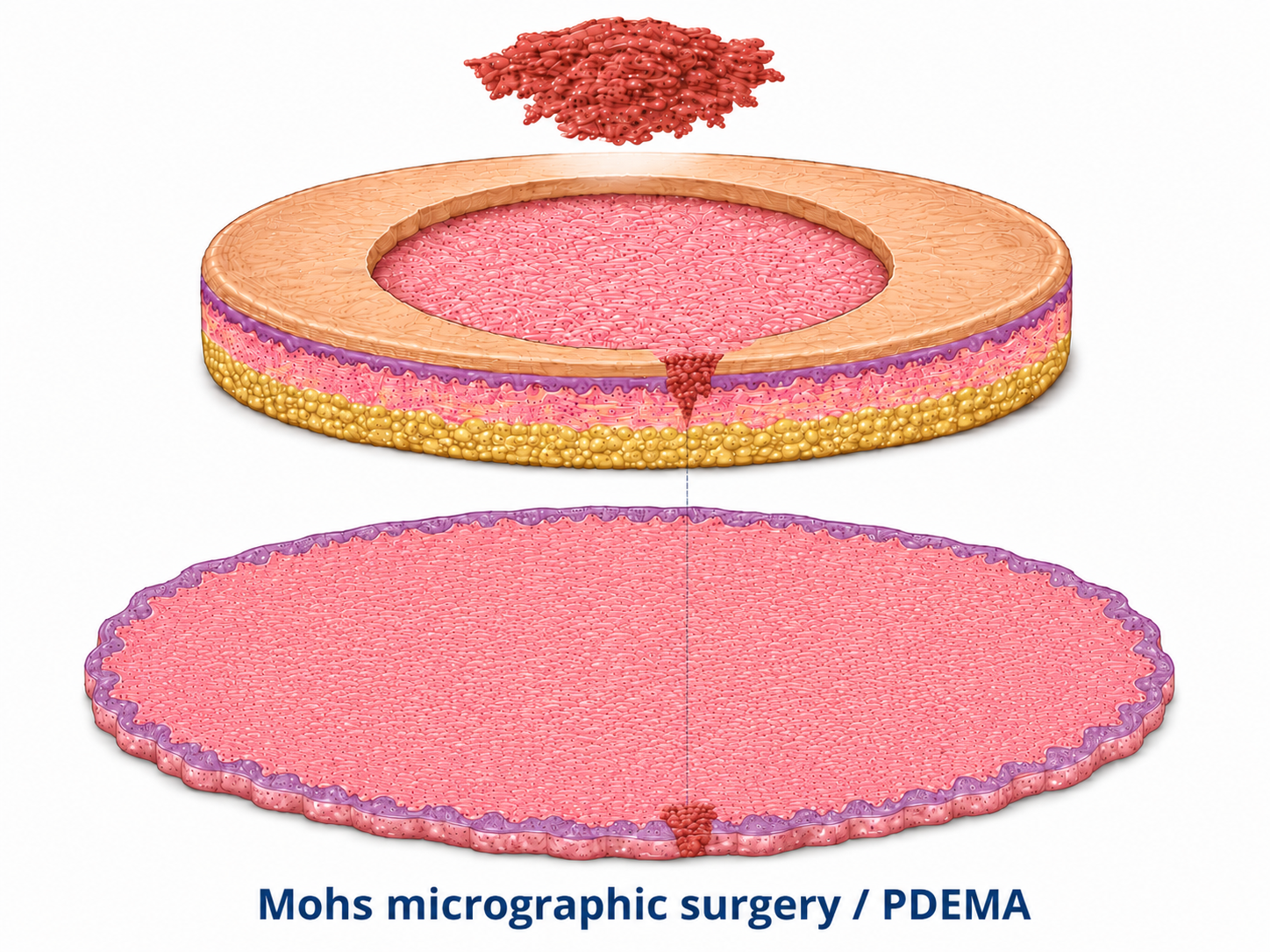
Key distinction: standard excision=margin sampling; PDEMA =complete assessment.

Margin Control: The Practical Framework

Standard excision

  • Predetermined margin
  • Immediate closure
  • Partial margin sampling

Best fit: low-risk tumors where subclinical spread is less concerning.

Mohs / PDEMA

  • Margin assessment first
  • Reconstruction after clearance
  • Tissue conservation

Best fit: sites or tumors where margin control changes the operation.

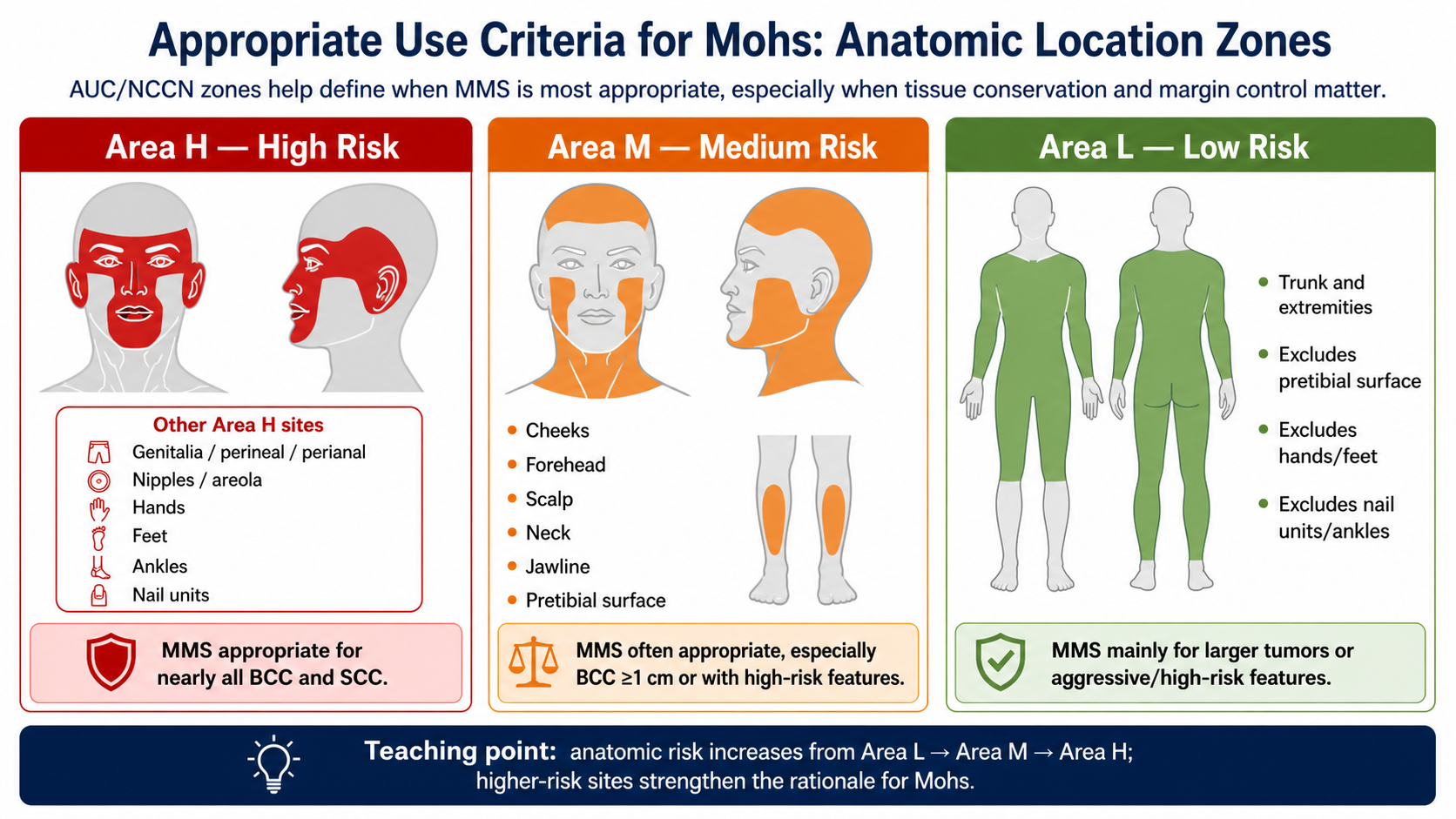
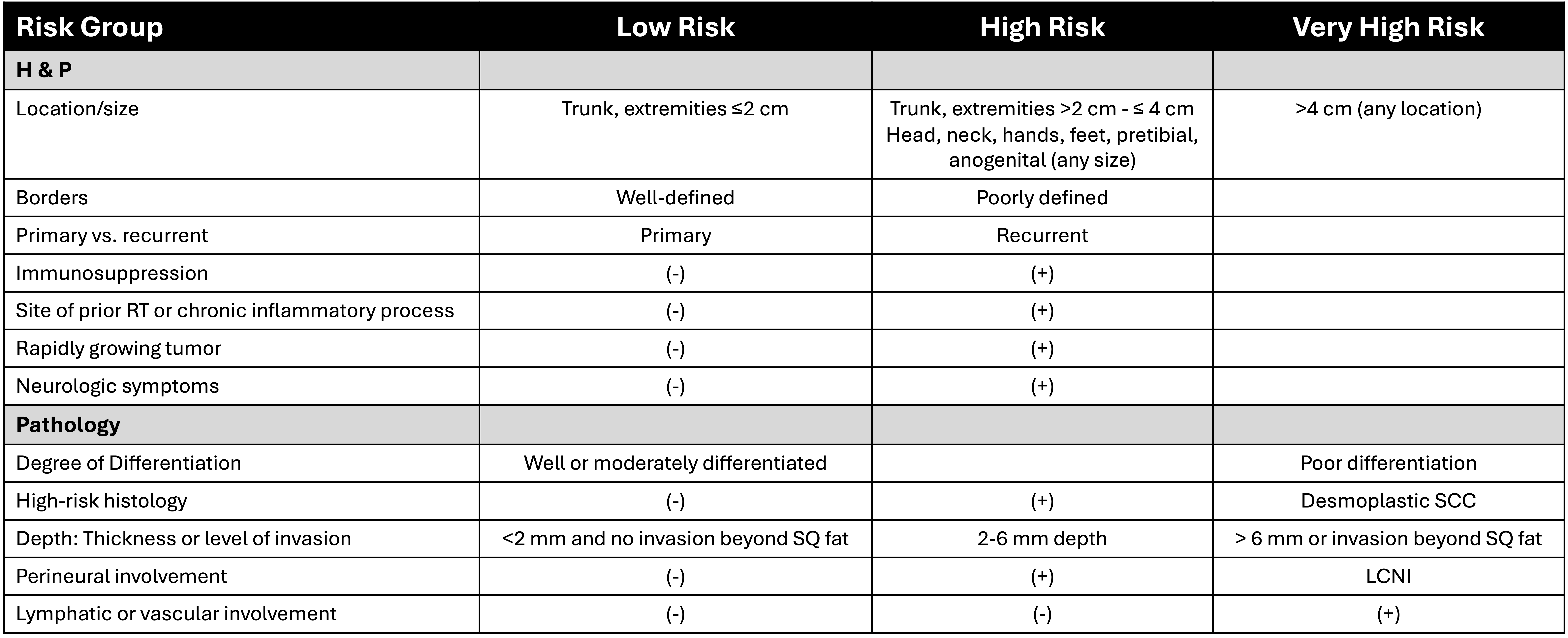
Why Location Matters

NCCN Risk Stratification
Answer: Margin-Controlled Surgery

This is a small, well-differentiated CSCC.


But it is on the forehead — where tissue conservation and margin control matter.

Practical answer: Mohs / PDEMA is preferred for high-risk head/neck CSCC.


For plastic surgeons: clear first, reconstruct second.

Why Mohs / PDEMA?

CSCC can extend beyond what is visible clinically.

Standard excision samples only a small fraction of the true margin.

Mohs / PDEMA provides complete peripheral and deep margin assessment.

Surgical principle: clear the tumor first; reconstruct once the margin question is answered.

NEJM review: Wysong et al. Squamous-Cell Carcinoma of the Skin.

Comparator Data: Limited Evidence

There are no randomized trials directly comparing Mohs/PDEMA vs standard excision for CSCC.

But large observational studies increasingly favor CMA.

Recent propensity-weighted cohorts show lower rates of:

  • Local recurrence
  • Nodal metastasis
  • Disease-specific death

Bottom line: strongest for very-high-risk CSCC; still reasonable here d/t location.

Wang et al. JAMA Dermatol. 2025; Wang et al. JNCCN. 2025; Stevens et al. JAMA Dermatol. 2023.

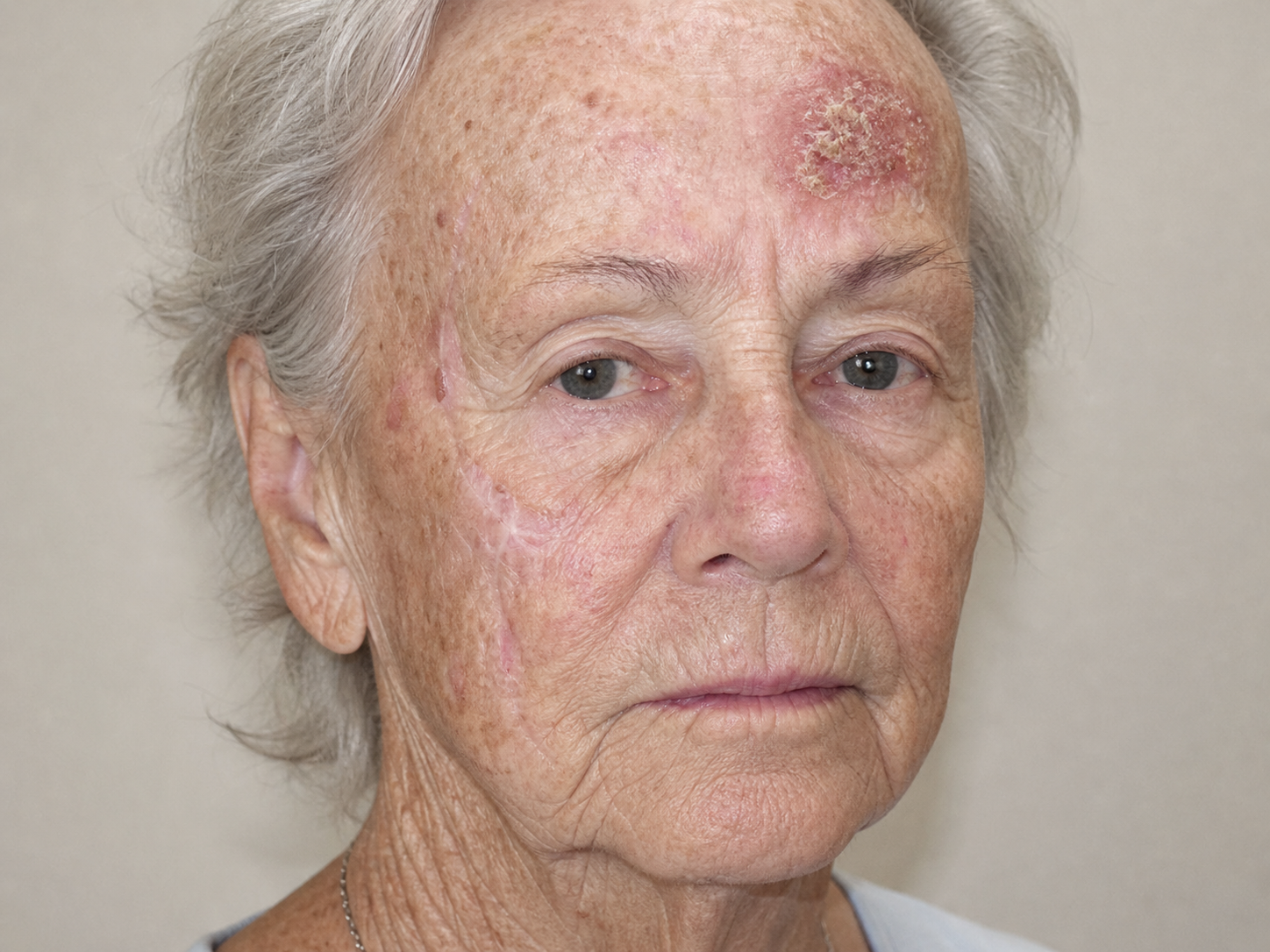
Case 5: Large Forehead CSCC

An 82-year-old woman with numerous prior NMSCs presents with a rapidly growing lesion on the left forehead.


Physical exam:

  • 4.1 cm
  • No clinical adenopathy

Biopsy shows:

  • Poorly-differentiated CSCC

Question: cut & close, or consult?

Case 5: Very-High-Risk cSCC

A 4.1 cm, poorly differentiated cSCC of the forehead is not just a local margin problem.

This is very-high-risk cSCC.

The key question becomes:

Should surgery happen first — or should systemic therapy be discussed before resection?

Why Medical Oncology Enters the Conversation

Neoadjuvant cemiplimab can produce major pathologic responses.

In a phase 2 trial of resectable stage II–IV cSCC:

  • pCR: 51%
  • Major pathologic response: 13%
  • Imaging ORR: 68%

Practical answer: discuss at tumor board / refer to medical oncology before definitive surgery.

Gross et al. NEJM 2022; Rischin et al. NEJM 2025.

Adjuvant Cemiplimab: C-POST

For selected high-risk cSCC after surgery and radiation:

  • Cemiplimab improved disease-free survival
  • 24-month DFS: 87% vs 64%
  • HR 0.32

Takeaway: perioperative systemic therapy is now part of the surgical planning conversation.

C-POST; Rischin et al. NEJM 2025.

CSCC: What Should Plastic Surgeons Remember?

Cut
Most CSCC is treated surgically.

Close
Reconstruct after the margin question is answered.

Consult
Very-high-risk tumors may benefit from multidisciplinary planning and systemic therapy.

Core principle: CSCC surgery is not just about removing the lesion — it is about choosing the right margin strategy.

Cut, Close, or Consult?

Cut
Biopsy and excision choices determine staging, margins, and next steps.

Close
Reconstruction is part of the oncologic plan — not separate from it.

Consult
High-risk melanoma and CSCC increasingly require multidisciplinary sequencing.

Final takeaway: the first procedure should preserve the next decision — diagnostic, surgical, and systemic.